Wednesday, May 23, 2012

When I Was a Kid

Today's post is written by our Executive Director, Jason Meyer. He writes from a parent's perspective about the importance of children developing a sense of wonder by spending time in nature.

When I was a kid, I rode the bus to school. I didn’t walk five miles uphill both ways in three feet of snow…bare foot. And no matter what my Dad told me, I don’t really believe he did either. He usually told me this as he was pointing out some lesson I had just learned about how hard life was.  And last night, as I was helping one of my own children learn about life, I actually caught myself saying, “When I was a kid, I walked to school….”

And in saying that, I learned another valuable lesson from Dad. No matter how much I try not to, I find myself becoming more and more like him on a daily basis. I haven’t gone as far as chaining the trailer to the gas meter so nobody would steal it and then driving off, but I’ve come to realize that somehow someway I will wreak havoc of that magnitude unintentionally, too. In spending about half of my life with the man, I learned that saying “I’ll never be like that,” only makes it more likely to happen.

While I cruise through life (just waiting for the day that the gas meter drags along behind me), I can’t help but think about what my kids are learning from me. My wife and I have made some pretty deliberate decisions to “bring them up right” – like choosing to live out in the country where the type of education that our children receive will include things like where the wood for our stove that heats the house comes from or why the tadpoles they put in the wading pool with all of that mud didn’t survive the winter. 

For an outdoorsman, though, I find myself overly worried about the kids when they are outside. “Don’t climb that high.” “That’s enough of that playing by the stinging nettle patch.” “Stop throwing dirt into the air.” Sheesh. I must be the most fun dad in the world, huh?

Against my better wishes, they continue to practice civil disobedience of my laws out of earshot. In many ways they are growing up wild and free, no matter how much I inadvertently try to squelch that by “providing guidance.” They know where the blackberry patches are.  Two of the three have poison ivy right now. They all have bumps and scratches from falling out of trees and they’ve had leeches from the creek in some pretty interesting places. They climb up and down the rock pile in their bare feet. They carry dirt from the garden around under their fingernails. They have even figured out that sunscreen makes pretty good hair gel. 
 
When I really think about it, though, I don’t want them to be like me – always worrying about what COULD happen. I love that they have little fear about the adventure that awaits behind the potting shed. The unfortunate thing about all of this is that in today’s world, children who have these types of experiences are abnormal. Ok, the KIDS aren’t abnormal, but their experiences are. 

I want to see a world where children are encouraged to play, to explore, to develop their own philosophies about the world before society tells them what’s “appropriate” and what’s not. I love to see children running, digging, looking under rocks and logs, and smelling the flowers. Unfortunately for them, these explorations are stifled because they MIGHT get hurt, or worse yet….DIRTY. 

Here’s the thing – we all have a lot to learn from our kids. And you don’t need to live out in the country to learn these lessons. You can do it right here in the heart of Lansing at Fenner Nature Center. Whether you are exploring the park with just your family or they are enrolled in one of our nature day camps or the Fenner Field School, these lessons are underfoot. And if you listen closely enough to what your kids are saying while they are here, you’ll remember what it was like to WONDER about things – I mean really really wonder. And wondering is a lesson we could all stand to re-learn.

Tuesday, May 8, 2012

No, we won't tell you where... Fenner's secret stash of morels

Before I even start, I have to tell you all that we don’t allow collecting of anything—berries, nuts, woodchucks, whatever—at Fenner. As much fun as it can be to go stomping out into the woods with a bucket or a grocery sack and come home with edible foraged goodies, Fenner is an oasis of nature in an urban area and we want to make sure that everybody in Lansing has a chance to see the species that call it home. This means that you cannot take those species home for your personal enjoyment…no matter how delightful they may be. If we catch you, you will get in trouble. 
 
With this disclaimer out of the way, we have morel mushrooms. These wrinkly, gray-to-brown delicacies are growing on our property. Found in hardwood forests all over the United States, morels grow in mid-spring and their season is upon us! In Michigan, morels can often be found poking up through the leaf litter on forest floors among trilliums and jack-in-the-pulpits. The mushrooms grow in clusters or “messes,” so where one morel is spotted there are most likely others nearby. If you see a morel, look for bulges in the leaf litter. These often conceal the other members of its mess. 

Morels are easily distinguishable by their pitted, wrinkly caps. These caps are connected to the stem, which is hollow. There is only one major poisonous look-alike: the false morel. False morels have caps that are brain or saddle-shaped. Their caps, unlike true morel caps, hang around the stem instead of being connected. Once you know this difference, it’s pretty hard to confuse the two.

Morels are delicious, but you have to prepare them correctly or you can get some unpleasant results. First, it’s best to soak them overnight in salt water to kill any insects that might be lingering in their hollows. Next, you need to cook them before eating them. While raw morels won’t kill you, they can make you sick. I recommend sautéing them in butter with some garlic, as this generally enhances the taste of almost all wild-foraged foods. From there, they are delicious in pasta dishes, on pizza, on Philly cheesesteak sandwiches, or anywhere else that you would normally put mushrooms.

In today’s ultra-cautionary world, mushroom foraging is put in the same category of daring as bungee jumping and tiger-wrestling.  As far as morels are concerned, however, safety is only a matter of being properly informed. Now that you are, feel free to go out looking for them! Just remember to make sure you follow these identification and preparation instructions closely. That, and make sure that the morels you pick are not at Fenner. Not that you know where ours are anyway…  

Tuesday, April 24, 2012

A parent's point of view: Learning about maple syrup with a Fenner homeschool program

Today's guest post comes from a community member and parent who attended one of our homeschool programs last month. Melissa writes the blog Cookies, Crayons, Classes & Chaos, and she was generous enough to write a post describing what she learned when her homeschool group attended a maple syrup tour at Fenner! We can't fit her entire post here, but be sure to visit the link at the bottom to see her entire post. She gives some great information about how maple syrup is made, as well as lovely photographs of the animals they encountered on their trip to Fenner.
Well, that was an interesting homeschool tour today!! Usually when our family has gone to the Maple Syrup festivals in the spring we want to cuddle up next to the warm fires where the syrup is boiling. Not so much today. Today, the campfire evoked thoughts of hot dogs, s'mores, and swimming holes, and we could use the smoke to keep the mosquitoes away instead of warming ourselves. Hard to believe it was almost 80 degrees!  I suppose this unseasonable warm weather is going to make Maple Syrup expensive since it cut the sap collecting season short.


Tree Anatomy

Lynette first taught everyone about tree anatomy using a nifty felt tree with felt "flappy" layers that peeled back to reveal each layer.

Learning about tree anatomy from Lynette using the felt tree

We learned about the trees layers starting from the outside: Bark, cambium, xylem, phloem, heartwood.

The tree rings are formed from the cambium when the xylem dies each year.

Learn more about how tree rings are formed at Real Trees 4 Kids.


Diagram from Tree Boss

"While the center of the trunk is usually "just wood" (Heartwood), the inner bark consists of living tissue. These layers are known as the Phloem and the Cambium, with the cambium being the growth layer....

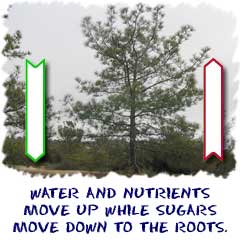
"The xylem transports water and nutrients up the tree, and phloem transports products of photosynthesis back down." -- Tree Boss


How Sap Flows

We learned that the sap would freeze during the winter and make the tree "explode".  So the tree sends all its sap to the roots during the winter.

When the weather warms up during the day the sap rises and then goes back down to the roots when the temperatures go below freezing at night.

Sap, the tree's nutrients, move up and down the tree in a loop during this cycle of warm and cold periods. 


Biology 4 Kids


To read the rest of this wonderful post, click here.

Thursday, April 5, 2012

Have fun and make a difference at Earth Day Extravaganza: Sunday, April 22nd


Every day we hear about environmental destruction in our world, and it may leave you thinking there is nothing you can do to make much of a difference. You CAN make a difference! On April 22nd, people around the world will stand up for the protection of our earth and participate in local events that celebrate our home planet. Together, we will call attention to environmental issues around the world and celebrate the nature we have all around us!

An exciting Earth Day Extravaganza will be held here at Fenner Nature Center, presented in partnership with the MSU Fisheries and Wildlife Club and the help of many other local organizations like The Nature Conservancy. This day of nature career exploration and stewardship features a variety of informative activities such as bird identification hikes, interactive presentations about native Michigan animals, wildflower identification hikes, and the opportunity to form a team and join our garlic mustard pull challenge! We are also kicking off our Butterfly Garden Restoration with the help of the Capital Area Master Gardeners.

As you enjoy all the activities of the day, don’t miss one of our most exciting events: Picnic for the Planet! With your help, the Nature Conservancy hopes to break the Guinness World Record for the most people picnicking in a 24-hour period around the world! Come enjoy the activities inside the visitor center and on the trails, and remember to bring a sack lunch so you can join The Nature Conservancy and make history!

Here is a schedule for the activities of Earth Day Extravaganza:
      Mist Netting: 7:00 am – 9:00
      Guided Bird Walk: 8:00 am – 9:00 am; 10:30 am – 11:30 am
      Wildflower Identification Hike: 9:30 am – 10:30 am; 1:30 pm – 2:30 pm
      Small Mammal Trapping: 9:30 am – 10:30 am
      Garlic Mustard Pull Challenge: 9:00 am – 3:00 pm
      Native Animal Presentation: 11:45 am – 12:45 pm
      Tree Identification Hike: 10:30 am – 11:30 am
      Pond Dipping: 11:00 am – 3: 00 am
      Herpetological Surveys: 12:30 pm – 2:30 pm
      Picnic for the Planet: 11:00am, 12:00pm, 1:00pm
      Bluebird nest checks: TBD
      Michigan Wildlife presentations: 10:00 am – 3:00 pm

Whether you intend to get your hands a little dirty and join us to help rid the park of invasive plants, create new habitat for butterflies and other integral pollinators, or simply come out to learn about nature and spend time outdoors with family and friends, we are certain that it will be an unforgettable day.

PNC Bank will also be on-site with their Mobile LearningAdventure! Be sure to stop by, check it out, and get your little ones involved in their interactive exhibits.

We hope to see you at Fenner Nature Center on April 22 for Earth Day Extravaganza!

For more information and updates, “like” our facebook page

Tuesday, March 27, 2012

Skunk Cabbage: the lovable oddball of Fenner’s swamps and marshes


Today's post is written by Lynette Score, one of our passionate naturalists here at the nature center. She writes about skunk cabbage, a telltale sign of spring in the marsh.

Check out our new woodchip trail- the one that branches off to the left soon after passing the vermicompost bins on the east side of the building. If you keep your eyes open as you enter the swamp, you might notice a purple plant with green spots growing in the marshy soil. No, you are not seeing things- this is skunk cabbage! 

skunk cabbage at Fenner Nature Center
Skunk cabbage is among the first plants to appear above ground after the winter (not that we really had a winter this year, but if we did…). While all the other plants are still dormant as seeds or bulbs or rhizomes in the frozen ground, skunk cabbage is already out and about. The first part of the plant to emerge, which is what you will see if you head out there now, is called the spathe. This is the purple, green-spotted thing I told you about. Skunk cabbage spathes emerge as early as February. If there had been any snow in the swamp this winter, you would have seen a snow-free circle around each spathe. This is because skunk cabbage spathes emit heat. No joke!

As the skunk cabbage matures further, a clump of small yellow flowers called the spadix forms inside the spathe. When the actual leaves unfurl in late spring, they are huge- up to a couple of feet long! If you crush a piece of a skunk cabbage leaf in your hand and smell it, you’ll understand how the plant gets its name. It definitely smells like a skunk. When the plant is fully mature, it forms an underground fruit that looks like a brain! This fruit has been rumored to have many medicinal uses including the treatment of convulsions, cough, and skin ailments. The Iroquois used the seeds from the fruit in fertility rituals. Talk about a cure-all!

Some people might try to tell you that skunk cabbage leaves are edible. Don’t believe them. Raw skunk cabbage leaves are toxic to mammals, which we are. Skunk cabbage leaves also contain calcium oxalate crystals, which cause a painful burning sensation in your mouth if you eat them. The theory behind eating skunk cabbage, as with a lot of “edible” plants, is that if you boil it enough it will become more palatable and safe to eat. This is also probably true of your belt, but that doesn’t mean that you should eat it. Furthermore, it is very difficult to remove all the calcium oxalate crystals, even with boiling. Getting to eat something that tastes not-painful at best isn’t worth the risk of getting sick or hurting your mouth.

Skunk cabbage is, however, an important resource for many species. Many small invertebrates eat the leaves, and the size of the leaves also makes them a great shelter source for small animals of all sorts. Since they aren’t affected by the calcium oxalate crystals and don’t seem to mind the smell, we’ll let them enjoy skunk cabbage as food and shelter. As for us, I would say there’s enough fun to be had by simply wondering at this oddball of a plant. 

Sources
www.fcps.edu/islandcreekes/ecology/skunk_cabbage.htm
www.wildmanstevebrill.com

Thursday, March 15, 2012

Volunteering at Fenner

Our guest post today is written by Cait Quinn, one of our enthusiastic volunteers. She writes about what it's like to volunteer at Fenner!

Hello!

My name is Cait and I’m going to be guest blogging for you all today! I’m a volunteer at Fenner and, like all of you wonderful supporters of the nature center, have fallen in love with the place! Everyday I come in, I never quite know what to expect. One day I could be emptying sap from maple trees, and the next I could be feeding all of our little creatures inside. There is always something new to help out with, and that sparked my interest to stay involved. I leave here always having something to talk about with my friends. For instance, did you know that Fenner used to have a prairie dog facility? After going through some files on my first day, I came across some old letters written by past Fenner employees requesting that the town of Lubbock, Texas catch and ship about a dozen prairie dogs to be a new exhibit for the nature center. What a cool thing to come across!

And in the Texan correspondent’s letter back to Fenner, the writer mentioned that they have been catching prairie dogs for many different cities around the US and even the world. Their most recent endeavor (as of March 1960) was sending prairie dogs to the King of Morocco. So our Fenner prairie dogs could have been from royal descent!

There is so much history here at Fenner and in our Lansing community that I encourage all of you to take advantage of. Fenner is so community oriented, and that definitely influenced my decision to continue volunteering here. Within the first hour I arrived I knew everyone’s name, they knew mine, and we could all joke around like we had known each other a lot longer. I think that’s the key to having such a successful nature center, because in the end, these 134 acres are for us all, not just those who hike the trails or study the outdoors. It’s for every resident to take advantage of! Come see our friendly turkeys outside the visitor center, hike the trails, learn about our maple syrup trees, sign up for a program and maybe even spot a deer or two while you’re here! And of course, come get to know the wonderful people who work for Fenner. We are glad to have you.

P.S. Join us for a pancake dinner on Saturday, March 17th at 4:00pm to celebrate and enjoy all the maple syrup we have made this year! I was just outside today emptying all the sap, and boy do we have a ton. So come enjoy our delicious syrup with some equally excellent pancakes.

Monday, March 12, 2012

Whitetail deer at Fenner Nature Center

Today's post is written by Lynette Score, one of our passionate naturalists here at the nature center. She writes about whitetail deer and how to find them at Fenner.

If you walk our trails, especially at dawn or dusk, you are likely to come across this graceful mammal. Found in every county in Michigan, the Whitetail Deer is a common but nonetheless breathtaking sight. Named for its fluffy white tail which it uses as a “danger flag” to signal its fellow deer, the whitetail plays an important but delicately balanced role in Michigan ecosystems.

As large predator populations that feed on the whitetail (primarily wolves and cougars) have been driven away and/or endangered by humans, the species’ Michigan population has skyrocketed out of control. Deer graze the forest bare in the winter, often starving to death and making it difficult for other species to find food. For this reason, many environmental experts now recommend deer hunting as a population management technique. While deer hunting is not permitted at Fenner, you should definitely try wild-caught venison the next chance you get. It will help regulate deer overpopulation and delight your taste buds at the same time!

Some fun facts about whitetail deer:
  • They can run 35 miles per hour, jump over obstacles 8 feet high, and cover 30 feet in a single bound (Peterson Field Guide). 
  • They have hollow hairs which provide insulation and help them float when they swim (Michigan DNR).
  • They live in family groups of up to 25 individuals. Each group is usually led by a female deer, or a doe (DNR).
  • Some female deer have antlers (DNR).
Find them at Fenner!

some recently sighted deer tracks
  • You can easily spot Whitetail Deer along our trails near dawn or dusk. The deer also visit our birdfeeders from time to time and steal the cracked corn!
  • At this time of year, the mud and snow on the ground make it easy to spot Whitetail Deer tracks.
  • In the autumn, male deer rub their antlers on trees to mark their territory. When you see trees with the bark scraped off, this is often the cause.