Thursday, February 28, 2013

Counting Birds with a Board


In today's post, Fenner Youth Leadership member, Nathan Martineau, writes about the new dry-erase board that will be used to improve Fenner's daily bird sighting records. Come to the Center and jot down your daily sightings today!

Those who have visited Fenner recently may have noticed a dry erase board to their
right as they walked through the front doors of the nature center. This new board
has been erected for the purpose of improving Fenner’s bird records. Although
there was a good system of keeping bird records as recently as 2010, daily bird
sightings at the park have not been recorded for the past couple of years. The board
is hopefully a solution.

This dry erase board is essentially a chart that allows anyone to record bird
sightings, along with the number of each bird species, during their time at Fenner.
If you are the first person that day to see a particular species, simply write the
number of that species you saw, or mark an “x” if you saw the species, but did not
count how many there were. If someone has already reported that species in larger
numbers than you saw, you don’t need to enter your count. If someone has reported
a species in smaller numbers, or has only marked an ‘x”, erase that count and write
yours in.
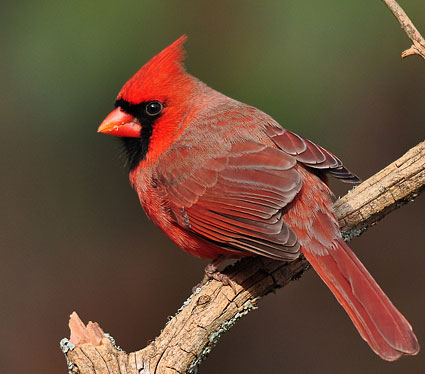
(Northern Cardinal, courtesy of allaboutbirds.org)

If you see a species that is not on the bulletin board, it is probably because it is
rare or very uncommon at that season. In this case, just write it in at the bottom
of the list. In months with particularly long bird lists, such as May and September
(the peak of spring and fall migrations), some of the most common species like
Black-capped Chickadee, Northern Cardinal and Blue Jay, will be left off the list to
accommodate for all of the migrant species coming through during that window of
time. These species are extremely common and should be spotted every day here at
Fenner, so it would be helpful to write down in the “NOTES” section if you don’t see
one of these expected species during your visit.

(Black-capped Chickadee, courtesy of ohio-nature.com)

The board covers a period of two weeks and is updated every other Sunday,
with the list of expected birds varying with the time of year. Accordingly, the list
becomes longer during migration and shorter in summer and winter.

(Blue Jay, courtesy of fcps.edu)

For those birders who have an account on the online bird records database, eBird,
there is another way to contribute to Fenner’s bird records: just share your eBird
checklist from Fenner with the username “Fenner NC.”

If you have any questions, shoot me an email at miyoungbirder@gmail.com.

Wednesday, February 13, 2013

Six-Legged Seducin'


In today's post, Fenner naturalist MacKenzie delves into the steamy world of insect romance in honor of Valentine's Day!  

Valentine’s Day has finally arrived, so I figured it would be a great time to talk about what is on everyone’s mind—S……............SCIENCE!

Particularly, I want to share some of the interesting way organisms find and attract mates. We know how some humans think they can attract mates—smelling nice, dressing nice, dancing, and complementing potential mates on how good they look.  We can find all of these in the wild, too—except for maybe the last part.

The first guy and gal I want to talk about are moths. Now, I know you’re thinking moths aren’t that sexy, but let me tell you —they’ve got great adaptations for finding the right mate! When they’re ready to mate females will stay in one place and give off a special scent called pheromones that attracts males from the same species. The males have great “noses” on their feathery antennae that pick up that scent in the air. That doesn’t seem too impressive until you hear this: a male polyphemus moth can find a female up to FIVE MILES AWAY. This means that about “one molecule of scent” is present in a “cubic yard of air.”  Could you imagine trying to find someone here at Fenner if you and your nose were all the way out in Okemos?  I honestly don’t want to imagine the pick-up lines that moth’s use: “I knew that I had to have you when I smelled you five miles away, baby."  

Anyway, the better their receptor, the better chance males have to find a good, smelly lady.  So these sensory receptors turn out to be pretty impressive.

                                                                     (asknature.org)

Next up, cockroaches!  This time we’re dealing with a nice treat the male roach provides for his lady. And no, we aren’t talking about chocolate, but it does have some of the same qualities. Once a cockroach has wooed his lady-roach, he releases an aphrodisiac from his abdomen called seducin “on which the female nibbles [on] during copulation.”  (Note the similarity to the word, “seduction”?)  And now we know why cockroaches are so prolific!

(entomology.unl.edu)
 Come and visit our Madagascar Hissing Cockroach colony next time you visit Fenner!

In this next species, the males are the ones that do the flashing to attract mates. Fireflies, or lightning bugs, use their lights to communicate with each other.  Although we won’t see fireflies at this time of year, during the summer months when you see those flashing lights, you are unintentionally listening in on either a steamy or deadly conversation!  Males will flash the ladies twice to signal their availability. If the lady firefly accepts, she flashes back once, inviting the male to seal the deal.  (Blink one for yes, two for no.) 

Most fireflies will spend their entire adult lives (about two weeks) trying to get it on.  This all sounds great, until one species of firefly learned how to use this communication scheme for evil.  It all begins the same way: the male flashes his lights twice to introduce himself: blink, blink. The photuris species of lightening bug will respond back to the male with the one blink, but instead of inviting the male to “seal the deal” they instead seal his fate with death. After luring the male over, they suck out his blood for a delicious but unromantic dinner.  So much for the happily ever after…….

                                                                          (firefly.org)

So, that is a very, very brief introduction to some of the crazy stuff involved in wooing or seducin’ (hah!) the ladies in the insect world. Who knew a two-week lifespan could be so steamy?

Want to learn more? Check out the book “Six-legged Sex: The Erotic Life of Bugs” by James K. Wangberg. If you've got any other interesting, sexy ways bugs try to attract one another, feel free to post them in the comments below!


http://www.npr.org/templates/story/story.php?storyId=4738074

Wednesday, October 3, 2012

Mornings at Fenner: A Flurry of Activity!

In today's post, Andrea (our Environmental Education intern) writes about her favorite time of day at Fenner: early in the morning! There's usually lots of activity at Fenner in the mornings - come check it out for yourself!


Fenner Nature Center is a place I love to be at any time of day. There is never a dull or boring moment. No matter the time of day, there is always something to see and do whether you’re simply going for a walk, participating in one of Fenner’s numerous programs, or volunteering. But if I had to pick my favorite time to be there, it would be, without question, early in the morning. This is when Fenner Nature Center is the most peaceful and the most alive.


A few times a week, I arrive at Fenner before the sun comes up. Even before I drive through the gate, I can tell that I’m entering a special place – a place where I no longer make the rules and, if I want to be rewarded, I must follow the rules of nature. As I drive down the road, the trees begin to form a canopy, engulfing me, and it becomes even darker. I stop here for a moment and take a look around. I must be patient – there is more to see here than I think at first. 


As my eyes begin to adjust, I notice a deer standing behind a tree. Her fawn is standing behind her, perfectly still. They know I’m here. As I look closer, I begin to see even more. There is a squirrel on the tree, scurrying down from its nest. Two turkeys begin to slowly meander across the road in front of my car. I begin to notice how loud the silence really is. Somewhere in the grasses, crickets are chirping. In the distance, I hear an owl hoot once more before retiring to its nest. The wind blows and I can feel the damp air on my face through the open car window. It smells like autumn and rain. To my left, leaves begin to rustle and I catch a glimpse of a groundhog waddling through the brush before he disappears. It’s beginning to get lighter out and I make my way down the road. I want to get out on the trails before the darkness disappears completely, because I know there is even more there waiting to be discovered.

We use our senses constantly every day. But when the majority of our time is spent behind a desk, behind the wheel of a car, and in front of a television, the dulling of our senses is inevitable. We stop seeing and hearing everything around us. But when we take a moment to stop, be still, and turn our brains off, our senses begin to awaken again. It’s amazing what nature is willing to show us if only we open our eyes and learn to see.

Animal photos by Sharkey Studios. 

Friday, September 28, 2012

The 39th Annual Apple Butter Festival

We loved this blog post by Lori in Lansing about our upcoming Apple Butter Festival and Beast of a Feast fundraiser, on the Greater Lansing Convention and Visitors Bureau's Buzz Blog! Check it out, and thank you to Lori and GLCVB for writing a wonderful post!


We have a super weekend coming up for everyone in the family to enjoy and to help celebrate Fenner Nature Center and the fall harvest. The 39th annual Apple Butter Festival is on tap for October 13th and 14th.

But what exactly is apple butter? And how is it made? Wikipedia states that “apple butter is a highly concentrated form of apple sauce, produced by long, slow cooking of apples with cider or water to a point where the sugar in the apples caramelizes, turning the apple butter a deep brown. The concentration of sugar gives apple butter a much longer shelf life as a preserve than apple sauce.” I don’t generally agree with everything posted on Wikipedia, but …well today I’m giving ole Wiki a pass because they actually reference Fenner’s Apple Butter Festival in their post. The ‘butter’ is in reference to the consistency, and there is actually no butter or dairy involved. In our house, we enjoy apple butter on toast and I have added it to turkey and brie sandwiches. Delicious!

At Fenner, they cook apples over an open fire in a big copper cauldron. People take turns stirring it. I’m not sure how long it takes, but I’m going to say a loooooong time, because this festival lasts a whole two days. And I hear they’ve got some local celebrity stirrers on hand. In addition, they will have arts and crafts, games and more. Yay!

And don’t miss the newest, latest and greatest addition to this weekend…it’s a Beast of a Feast on Friday night. Call up the babysitter and then head over with your friends for some all-you-can-eat pulled pork and live music from the Whiskey Pickers. This is promising to be a great evening of socializing, dancing, eating and just plain fun. And the proceeds benefit this wonderful Lansing gem-Fenner Nature Center. So let’s stir up some great fall fun and make some memories to last a lifetime.


Beast of a Feast Fundraiser: Friday, October 12, 6-10 p.m.
$25 pre-event ticket or $30 day of the event ticket.
  
Apple Butter Festival: Saturday and Sunday, October 13-14, 11 a.m.-5 p.m. each day
Admission is free!

Thursday, September 13, 2012

The People Behind the Scenes at Fenner Nature Center

In today's post, Ken Sattler writes about the staff and volunteers who make our many programs possible, and who are dedicated to keeping Fenner looking beautiful too. Consider becoming a volunteer for our upcoming "Beast of a Feast" fundraiser and our Apple Butter festival by filling out this quick application


My last couple of posts talked about the wonder, discovery, and ‘literal awesomeness’ of Fenner. To be sure, it’s a fantastic place – a gem in the Lansing community. But my intent for interning here was to learn what makes an amazing place like this tick. What I’m finding is that it’s a complex chemistry between a staggering array of variables. There are, of course, the big, highly visible things which need to be coordinated – the excellent day camps, school programs, and festivals to name a few. These all require countless hours of planning and organization. There are also endless minutiae that must be addressed – things that the average visitor to Fenner will likely never notice, but which would be sorely missed if they were to go neglected.

At the end of the day it all really boils down to a small fleet of very dedicated people putting in a lot of hard work and careful planning.  Many of the people who put in the work on the grounds and the programs and advisory boards are volunteers. Personalities need to mesh, and that doesn’t always happen smoothly. Agreements must be reached – sometimes compromises must be made. Funding must be found to implement plans, and that takes a whole other set of people working behind the scenes to make sure that Fenner can continue to be the haven that it is, and can run the excellent programs that it does.

To walk the grounds at Fenner is to experience a peaceful respite amid the bustle of the City of Lansing. Behind the serenity of nature is a flurry of activity – plants and animals working in cooperation and in competition with one another to survive and to thrive. Behind the serenity of Fenner is a similar struggle. These dedicated staff and volunteers are creating the partnerships and wrestling with the issues that need to be faced in order to keep Fenner running smoothly. Like the rest of the wildlife here, they can be hard to spot at times. But they’re around, if you know where to look. If you happen to cross paths with any of them, take a moment to let them know how much you enjoy Fenner, and appreciate the work they put in to keep it running.


On October 12th, Fenner will be having their first annual "Beast of a Feast" fundraiser, complete with tasty food and drinks, a silent auction full of exciting items (like this roadside rescue dresser), and a great local band, The Whiskey Pickers! And on October 13th and 14th will be Fenner's 39th annual Apple Butter Festival complete with live music, old-fashioned games, food, and of course the stirring of the apple butter! 

To make all of these wonderful events and celebrations possible, Fenner needs the help of many volunteers. Please consider giving a bit of your time and fill out this application to let us know what you would be interested in doing as a volunteer. And enjoy all the festivities too!

Thursday, September 6, 2012

September Bird of the Month: Black-and-white Warbler

In today's post, Nathan Martineau writes about the Black-and-white Warbler, a bird that can easily be found at Fenner right now. Come to Fenner to see it yourself!


The month of September brings the opportunity to see many birds during their fall migration here at Fenner--including the Black-and-white Warbler (Mniotilta varia). Also, this month the Capital Area Audubon Society is leading Fall Migration Bird Walks here at Fenner on Saturdays (9-11am), which is another great opportunity!

The Black-and-white is different from other warblers because first, it is one of the few members of its family that does not change appearance between spring and fall, while the others transform from their bright spring plumage into "LBJs" or "little brown jobs." In fall, these"LBJs" are quite dully colored and similarly patterned and sometimes prove an extreme challenge to identify by species. 

Secondly, the Black-and-white Warbler has a very unique habit of hitching up and down tree trunks and branches while foraging for food, quite like a woodpecker or a nuthatch would do. Only one other species of warbler exhibits this behavior (the Prothonotary Warbler if you are curious), and even they only do it occasionally. 

Male
Female


The Black-and-white, as well as other warblers, can be found in any wooded setting throughout the park in migration, although the migrant birds tend to concentrate around the Woodland and Field Ponds, and the parking lot.  This may not be true on some days, though, as migration is always hit-or-miss and each day is different. Black-and-whites can be very common on a good migration day. They can be found here from late April through late May and again from September to early October.   

Thursday, August 30, 2012

A Night Hike at Fenner


In today's post, Jen Ismirle writes about enjoying the glimpses of animals and their activities she observed on our last night hike of the summer. 

For the past few weeks, I've been wanting to go on Fenner’s Summer Night Hike, but because of family plans and the rain, I kept missing out. But finally, last Friday, my schedule opened up and rain was absent in the weather forecast; it was all systems go!

There ended up being 12 of us total on the hike, including myself and our guide, Martha. She gave a brief presentation in the library first, showing us pictures of various animal we might see and also playing the sounds that different owls make. The screech of the barn owl was particularly interesting, and scary: click here to hear it.

We headed outside after that, and it was still light out as we began our trek. I was excited though to hear Martha say that this night hike would be the darkest one yet, as it is starting to get darker earlier. As we walked about, she stopped us a few times to play bird calls from a tape player she had, but apparently the owls and other birds were feeling shy or just weren’t around right then, because the calls didn’t lure them out.

Although I was disappointed that we didn’t happen upon any owls, we definitely weren’t alone on our walk. There were many squirrels rustling around nearby, and we also saw two deer, separately. We only caught a quick glimpse of the first one as it dashed behind some trees, but we were able to watch the second one romp across the entire field before it too disappeared amongst the trees. We saw a rabbit as it wandering through the forest too, just before we headed out into the field. Unfortunately, I was too slow to catch any of the animals with my camera.

By that point, it was starting to get dark and we could see a couple bats darting around in the sky as they were catching insects. When we walked over to the Field Pond, the children on the hike spotted a spider on its web, and were extremely interested in investigating it up-close. I stayed back as I am not big on spiders myself, but it was fun to watch the kids so fascinated by the spider and asking questions about it. They were fearless!

As it grew entirely dark, we winded our way through the rest of the field and around the Central Pond. Throughout the walk, we could rustlings all around us and many different bird calls, but we could no longer see what was making these noises. The children and some of the adults whipped their flashlights around, but it was difficult to catch a glimpse of these creatures of the night. We could also hear splashes from time to time in the pond, but only see the ripples on the water.

After we made our way back to the Visitor Center, it was time for a bonfire and s’mores! And after that, since we hadn’t been able to see any owls in-person, Martha brought out some owl pellets for the kids to dissect. They were able to find quite a few animal bones inside the pellets, including a rodent skull (which is on the right below).


I am very glad I was finally able to attend one of these night hikes, though sadly it was the last summer night hike for this year. It was interesting to witness (through sight and sound) the nocturnal activities of so many different animals, which I didn't even realize are happening nearby while I am sound asleep inside my home.

Starting September 1st, there will also be Fall Migration Bird Walks, led by the Capital Area Audubon Society. Check out Fenner’s calendar to learn more.