Saturday, April 13, 2013

The Morning Cloak Butterfly


In today's post, David Martin talks about the arrival of spring
 with the habits of the Morning Cloak butterfly.

Bird enthusiasts will often claim that spring has finally arrived once certain birds migrate back to Michigan, like the American Robin, the Red-Winged Blackbird, or the Sandhill Crane. However, the emergence of a much smaller winged creature might actually be a better harbinger of warmer weather – the Mourning Cloak butterfly.


The Mourning Cloak butterfly is
the earliest butterfly you can see at Fenner in the springtime.

The Mourning Cloak butterfly (Nymphalis antiopa) is one of the toughest butterflies in Michigan. Unlike many other species of butterflies, the Mourning Cloak butterfly overwinters at Fenner instead of migrating south. It nestles into dense brush, behind loose tree bark, or even under roof shingles to survive the cold winter temperatures. When the daylight hours start to get longer, the Mourning Cloak butterfly will emerge from its hibernation, often when snow still is on the ground. You may even see them at Fenner in late March.

The Mourning Cloak butterfly has large, dark colored wings that soak up sunrays and keep them warm on the chilly spring days. You can see them in sunny areas with their wings outspread and droopily relaxed, trying to warm up their cold wings before flying. This behavior is called “basking”. The bottom sides of its wings are a mottled brown and gray color that helps it blend into its habitat and camouflage it from predators.


Mourning Cloak butterfly basking
on a newly budding branch in early April 2012.

In the early spring, the Mourning Cloak butterfly emerges and begins to look for its springtime meal of tree sap. It likes the same sugar maple sap collected at Fenner during the Maple Syrup Festival. The Mourning Cloak butterfly also likes the sap of many other trees, especially oak tree sap – definitely not the kind you would put on your pancakes! As the sap slows later in the spring and other sources of food emerge, the Mourning Cloak butterfly will get its nutrients from rotting fruit and sometimes flower nectar. Like many types of butterflies, the Mourning Cloak will also land on certain types of damp soil to lick up minerals and even do the same with animal droppings. This behavior is called “puddling”.


Mourning Cloak butterfly puddling
on the gravel portion of a trail at Fenner.

When spring turns to summer and the weather gets hot and dry, the Mourning Cloak butterfly will find a good place to hide away and go into a type of summer hibernation called “aestivation”. As the weather cools in the late summer and autumn, the Mourning Cloak butterfly emerges again to feast on the late summer fruits before finding a place to nestle down for winter. It is not uncommon to see this butterfly in October or early November at Fenner, especially if we have mild and damp fall weather.


The bottom side of the Mourning Cloak butterfly’s 
wings are patterned to provide camouflage to hide it from predators.

In addition to its early spring emergence and late fall hibernation, the Mourning Cloak butterfly tops the record books in a couple other ways. It has a wingspan between 3 to 4 inches, making it one of the larger butterflies you may see at Fenner. For comparison, the Monarch butterfly has a similar wingspan size. The Mourning Cloak butterfly also has one of the longest lifespans of butterflies and can live up to a year. Most will not winter over twice, but they do outlive most of their butterfly counterparts.


This Mourning Cloak butterfly photographed in the early spring 
has tattered wings and probably overwintered at Fenner from the previous autumn.

You can find Mourning Cloak butterflies all over Fenner, but they prefer the more wooded areas because those contain their source of food. Just east of the Woodland Pond along the east side of the Tamarack Trail, there is a low area where it stays damp much of the spring and fall. There are plenty of the Mourning Cloak’s favorite trees in this area and you can almost always find a few of this type of butterfly flitting around or sunning themselves in the spring or fall. Some of them are very friendly and may even land on your clothing if it is a color similar to the tree bark!

Wednesday, April 3, 2013

Insects of the Spring and Summer Seasons!


In today's post, David Martin talks about the emergence of the warmer seasons and the tiny winged creatures that we can expect to see at Fenner!

As winter finally releases its hold on us, and spring arrives, I start to get the itch for the warmer days that soon will arrive and the amazing little creatures that will begin emerging at Fenner.  While many people frequent Fenner for its diversity of birds, I love the equally diverse, albeit much smaller, winged creatures that also call Fenner home – dragonflies and butterflies.

Fenner has good habitat for both types of insects with its open fields, wooded ponds, and deciduous and coniferous forests.  From mid-March to early November you can find a large number of butterflies around the grounds, but the dragonflies wait until a bit later in the spring to emerge.  The first butterfly tends to be the Mourning Cloak butterfly, a Michigan native that overwinters under the bark of dead trees.  You can almost always find a dark-brown Mourning Cloak just to the east of the Woodland Pond.  Soon afterward, the Eastern Comma and Question Mark butterflies start to emerge in the wooded areas and along the edges of the fields.  The Red Admiral butterfly with its bright red stripes on dark wings also can be found in early spring and some years they will seem to be everywhere at Fenner in large numbers.

  (Question Mark butterfly, courtesy of David Martin)


As spring slowly turns to summer, the dragonflies start to emerge.  You see them about the time you start seeing the pesky mosquitoes on which they feast throughout the summer arrive.  At Fenner, the small Dot-Tailed Whiteface dragonfly and the large Common Green Darner probably will be the first dragonflies you will encounter.  Several different species of Clubtail dragonflies will also emerge in late May and early June, but soon will be gone until next year.  The large Mosaic Darner dragonflies, like the Green-Striped Darner and the Lance-Tipped Darner, start arriving and will hang around until September.  They like to patrol the fields for meals and frequent the ponds for laying their eggs.

In May and June the variety of butterflies explodes.  The fantastically colored American and Painted Lady butterflies arrive.  You can see them in the big field flitting among the wildflowers.  The ubiquitous orange and black Monarch butterfly also starts to make itself known along with its doppelganger, the Viceroy butterfly that mimics the Monarch in order to take advantage of its reputation as a bad-tasting meal.  Tiny Skippers of species too numerous to name and the miniscule Summer Azure butterflies zip by nearly unnoticed because of their diminutive size.  The American Copper, equally as small, grabs your attention with its bright orange on its upper wings.

   (Viceroy butterfly, courtesy of David Martin)


Summer brings with it several similar species of Skimmer dragonflies.  The aptly named Twelve Spotted Skimmer, Widow Skimmer, White-Tailed Skimmer, and Slaty Skimmer begin their summer-long flights at Fenner in mid-June.  The magnificently ornate wings of the Calico and Halloween Pennant dragonflies look almost like stained glass windows.  In mid-July the Meadowhawk dragonflies emerge and quickly dominate the fields at Fenner for the rest of the summer.  Several species of Meadowhawk dragonflies with names like Ruby, White-Faced, Autumn, and Cherry-Faced quickly outnumber most other dragonflies at Fenner.


The summer months also welcome large Swallowtail butterflies.  The yellow and black Eastern Tiger Swallowtail will probably be the largest butterfly you see at Fenner, but occasionally the reclusive Giant Swallowtail will flit by with its never-stopping, erratic flight pattern.  Black Swallowtail and Spicebush Swallowtail butterflies also frequent the wildflowers in fields.  As summer slowly turns to autumn, the wildly spotted and colorful Common Buckeye butterfly arrives and seems to fit right in with the changing foliage.  The Mourning Cloak butterflies from the early spring show up again in the cooler weather that they prefer.

Occasionally, Fenner even hosts a few special guests.  In the spring of 2012, I happened to photograph a number of Darner dragonflies that I could not identify at first.  Their species, the Spatterdock Darner, generally does not venture this far north, so my books did not show them in this area.  Their bright blue bodies and eyes were quite the sight to see.  In the late summer of 2012, I caught some fleeting photographs of a very special guest, a Laura’s Clubtail dragonfly.  These dragonflies are a special interest species in Michigan and are an endangered species in Canada.  I only captured a few photos, but this encounter was probably an once-in-a-lifetime experience.

 (Spatterdock Darner, courtesy of David Martin)


The next time you visit Fenner in warm weather, make sure to look out for the little winged creatures that play a vital role in our ecosystem.

Thursday, March 14, 2013

Fenner Volunteerism and Development: Why I give to Fenner Conservancy.

In today's post, Mark Ledebuhr, a long-standing volunteer and supporter of Fenner Conservancy shares why he gives back so much to Fenner and to his community.

I don’t talk about this often, but something happened recently that inspired me to share my motivations for serving the Fenner community.

Mid-January I was at the Stewardship Network annual conference in East Lansing, looking around at the crowd of about 400 people. About 1/3 of them were professionals. The rest were simply private citizens, so passionate about improving their environment that in some cases they came hundreds of miles to improve their land stewardship knowledge and skills. Sitting in that group it seemed obvious that someone would want to be part of such a positive, pro-active group, yet the attendance numbered in the hundreds, not millions. Why? As I scanned the crowd, two things become fairly obvious quickly: this crowd of environmentally aware, eager land stewards are a) fairly educated and affluent, and b) not ethnically diverse. One of the keynote speakers even commented on the lack of diversity and the need for us to change that. He was right. Environmental awareness is everyone’s birthright!


The next weekend I was at the Auto Show in Detroit. The 100,000+ people that day were definitely diverse; in fact it was one of the most diverse crowds I’ve seen in a long time.

Why the disparity? I would argue two things: Access and Tradition. Cars are a part of everyone’s life, and the value proposition is universally clear: transportation, entertainment, a show of status. How many people can state such a clear value proposition about what nature and environment mean to them? There are so many of us never really take the opportunity to know nature. Too many children these days grow up with a disconnection from their natural world, and you can’t value something that you have no connection to. When we miss the opportunity to instill this connection, this wonder, in every child, we are all poorer for it.

I had the fortune of growing up at the edge of suburbia with miles of woods and swamp literally out the back door. I can no more envision a world without salamanders, crayfish, wild plums, and grouse than I could envision a world without roads and skyscrapers. Because of my experiences as a child and as a conservationist, I want every child to have access, to develop a personal connection to the diversity and wonder of nature. Environmental awareness is every bit as critical a skill in modern society as reading, writing and arithmetic- but it can’t be taught wholly in a classroom. Growing up without environmental awareness is like eating white bread- you’ll get by on it but it doesn’t really sustain you over the long haul. And, eventually, if that’s all you eat, you might become really sick. Where will our 13,700+ urban children in Lansing learn to connect with Nature? Who will lead them?

They can get it at Fenner. It’s not just kids. Nearly every Lansing area resident I talk with has a “Fenner Moment”- something positive that happened to them at Fenner, sometime in their life, which in some way made their life better.


Most residents in the greater Lansing region still don’t know that Fenner is a Public-Private partnership; leveraging scarce tax dollars into bigger impact with community support. I am proud Lansing supports this critical component of our community with tax dollars. And I am proud to do more. I teach a fishing class at the nature center in the summer, fix things around the center, and help out with festivals. I’m also a member of Fenner Conservancy’s Development Committee. My wife and I make annual donations, she serves on the board, and also volunteers in the Explore Store. It sounds like a lot, but it takes a lot. We don’t do it for praise; we do it because it is making a difference.

We are only two among hundreds of volunteers and donors that support the staff and programming - the heartbeat of this organization. Fenner is moving forward and needs your support more than ever.

Please, take stock of your time, talent, and perhaps your treasure, and engage deeper if you can- it’s worth it.

Thursday, February 28, 2013

Counting Birds with a Board


In today's post, Fenner Youth Leadership member, Nathan Martineau, writes about the new dry-erase board that will be used to improve Fenner's daily bird sighting records. Come to the Center and jot down your daily sightings today!

Those who have visited Fenner recently may have noticed a dry erase board to their
right as they walked through the front doors of the nature center. This new board
has been erected for the purpose of improving Fenner’s bird records. Although
there was a good system of keeping bird records as recently as 2010, daily bird
sightings at the park have not been recorded for the past couple of years. The board
is hopefully a solution.

This dry erase board is essentially a chart that allows anyone to record bird
sightings, along with the number of each bird species, during their time at Fenner.
If you are the first person that day to see a particular species, simply write the
number of that species you saw, or mark an “x” if you saw the species, but did not
count how many there were. If someone has already reported that species in larger
numbers than you saw, you don’t need to enter your count. If someone has reported
a species in smaller numbers, or has only marked an ‘x”, erase that count and write
yours in.

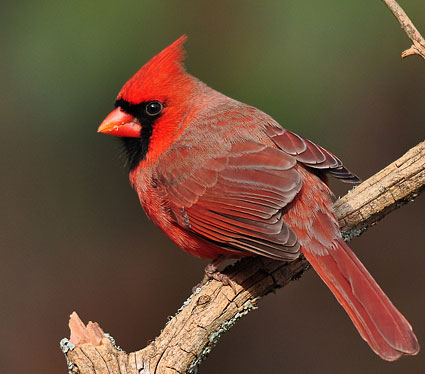
(Northern Cardinal, courtesy of allaboutbirds.org)

If you see a species that is not on the bulletin board, it is probably because it is
rare or very uncommon at that season. In this case, just write it in at the bottom
of the list. In months with particularly long bird lists, such as May and September
(the peak of spring and fall migrations), some of the most common species like
Black-capped Chickadee, Northern Cardinal and Blue Jay, will be left off the list to
accommodate for all of the migrant species coming through during that window of
time. These species are extremely common and should be spotted every day here at
Fenner, so it would be helpful to write down in the “NOTES” section if you don’t see
one of these expected species during your visit.

(Black-capped Chickadee, courtesy of ohio-nature.com)

The board covers a period of two weeks and is updated every other Sunday,
with the list of expected birds varying with the time of year. Accordingly, the list
becomes longer during migration and shorter in summer and winter.

(Blue Jay, courtesy of fcps.edu)

For those birders who have an account on the online bird records database, eBird,
there is another way to contribute to Fenner’s bird records: just share your eBird
checklist from Fenner with the username “Fenner NC.”

If you have any questions, shoot me an email at miyoungbirder@gmail.com.

Wednesday, February 13, 2013

Six-Legged Seducin'


In today's post, Fenner naturalist MacKenzie delves into the steamy world of insect romance in honor of Valentine's Day!  

Valentine’s Day has finally arrived, so I figured it would be a great time to talk about what is on everyone’s mind—S……............SCIENCE!

Particularly, I want to share some of the interesting way organisms find and attract mates. We know how some humans think they can attract mates—smelling nice, dressing nice, dancing, and complementing potential mates on how good they look.  We can find all of these in the wild, too—except for maybe the last part.

The first guy and gal I want to talk about are moths. Now, I know you’re thinking moths aren’t that sexy, but let me tell you —they’ve got great adaptations for finding the right mate! When they’re ready to mate females will stay in one place and give off a special scent called pheromones that attracts males from the same species. The males have great “noses” on their feathery antennae that pick up that scent in the air. That doesn’t seem too impressive until you hear this: a male polyphemus moth can find a female up to FIVE MILES AWAY. This means that about “one molecule of scent” is present in a “cubic yard of air.”  Could you imagine trying to find someone here at Fenner if you and your nose were all the way out in Okemos?  I honestly don’t want to imagine the pick-up lines that moth’s use: “I knew that I had to have you when I smelled you five miles away, baby."  

Anyway, the better their receptor, the better chance males have to find a good, smelly lady.  So these sensory receptors turn out to be pretty impressive.

                                                                     (asknature.org)

Next up, cockroaches!  This time we’re dealing with a nice treat the male roach provides for his lady. And no, we aren’t talking about chocolate, but it does have some of the same qualities. Once a cockroach has wooed his lady-roach, he releases an aphrodisiac from his abdomen called seducin “on which the female nibbles [on] during copulation.”  (Note the similarity to the word, “seduction”?)  And now we know why cockroaches are so prolific!

(entomology.unl.edu)
 Come and visit our Madagascar Hissing Cockroach colony next time you visit Fenner!

In this next species, the males are the ones that do the flashing to attract mates. Fireflies, or lightning bugs, use their lights to communicate with each other.  Although we won’t see fireflies at this time of year, during the summer months when you see those flashing lights, you are unintentionally listening in on either a steamy or deadly conversation!  Males will flash the ladies twice to signal their availability. If the lady firefly accepts, she flashes back once, inviting the male to seal the deal.  (Blink one for yes, two for no.) 

Most fireflies will spend their entire adult lives (about two weeks) trying to get it on.  This all sounds great, until one species of firefly learned how to use this communication scheme for evil.  It all begins the same way: the male flashes his lights twice to introduce himself: blink, blink. The photuris species of lightening bug will respond back to the male with the one blink, but instead of inviting the male to “seal the deal” they instead seal his fate with death. After luring the male over, they suck out his blood for a delicious but unromantic dinner.  So much for the happily ever after…….

                                                                          (firefly.org)

So, that is a very, very brief introduction to some of the crazy stuff involved in wooing or seducin’ (hah!) the ladies in the insect world. Who knew a two-week lifespan could be so steamy?

Want to learn more? Check out the book “Six-legged Sex: The Erotic Life of Bugs” by James K. Wangberg. If you've got any other interesting, sexy ways bugs try to attract one another, feel free to post them in the comments below!


http://www.npr.org/templates/story/story.php?storyId=4738074

Wednesday, October 3, 2012

Mornings at Fenner: A Flurry of Activity!

In today's post, Andrea (our Environmental Education intern) writes about her favorite time of day at Fenner: early in the morning! There's usually lots of activity at Fenner in the mornings - come check it out for yourself!


Fenner Nature Center is a place I love to be at any time of day. There is never a dull or boring moment. No matter the time of day, there is always something to see and do whether you’re simply going for a walk, participating in one of Fenner’s numerous programs, or volunteering. But if I had to pick my favorite time to be there, it would be, without question, early in the morning. This is when Fenner Nature Center is the most peaceful and the most alive.


A few times a week, I arrive at Fenner before the sun comes up. Even before I drive through the gate, I can tell that I’m entering a special place – a place where I no longer make the rules and, if I want to be rewarded, I must follow the rules of nature. As I drive down the road, the trees begin to form a canopy, engulfing me, and it becomes even darker. I stop here for a moment and take a look around. I must be patient – there is more to see here than I think at first. 


As my eyes begin to adjust, I notice a deer standing behind a tree. Her fawn is standing behind her, perfectly still. They know I’m here. As I look closer, I begin to see even more. There is a squirrel on the tree, scurrying down from its nest. Two turkeys begin to slowly meander across the road in front of my car. I begin to notice how loud the silence really is. Somewhere in the grasses, crickets are chirping. In the distance, I hear an owl hoot once more before retiring to its nest. The wind blows and I can feel the damp air on my face through the open car window. It smells like autumn and rain. To my left, leaves begin to rustle and I catch a glimpse of a groundhog waddling through the brush before he disappears. It’s beginning to get lighter out and I make my way down the road. I want to get out on the trails before the darkness disappears completely, because I know there is even more there waiting to be discovered.

We use our senses constantly every day. But when the majority of our time is spent behind a desk, behind the wheel of a car, and in front of a television, the dulling of our senses is inevitable. We stop seeing and hearing everything around us. But when we take a moment to stop, be still, and turn our brains off, our senses begin to awaken again. It’s amazing what nature is willing to show us if only we open our eyes and learn to see.

Animal photos by Sharkey Studios. 

Friday, September 28, 2012

The 39th Annual Apple Butter Festival

We loved this blog post by Lori in Lansing about our upcoming Apple Butter Festival and Beast of a Feast fundraiser, on the Greater Lansing Convention and Visitors Bureau's Buzz Blog! Check it out, and thank you to Lori and GLCVB for writing a wonderful post!


We have a super weekend coming up for everyone in the family to enjoy and to help celebrate Fenner Nature Center and the fall harvest. The 39th annual Apple Butter Festival is on tap for October 13th and 14th.

But what exactly is apple butter? And how is it made? Wikipedia states that “apple butter is a highly concentrated form of apple sauce, produced by long, slow cooking of apples with cider or water to a point where the sugar in the apples caramelizes, turning the apple butter a deep brown. The concentration of sugar gives apple butter a much longer shelf life as a preserve than apple sauce.” I don’t generally agree with everything posted on Wikipedia, but …well today I’m giving ole Wiki a pass because they actually reference Fenner’s Apple Butter Festival in their post. The ‘butter’ is in reference to the consistency, and there is actually no butter or dairy involved. In our house, we enjoy apple butter on toast and I have added it to turkey and brie sandwiches. Delicious!

At Fenner, they cook apples over an open fire in a big copper cauldron. People take turns stirring it. I’m not sure how long it takes, but I’m going to say a loooooong time, because this festival lasts a whole two days. And I hear they’ve got some local celebrity stirrers on hand. In addition, they will have arts and crafts, games and more. Yay!

And don’t miss the newest, latest and greatest addition to this weekend…it’s a Beast of a Feast on Friday night. Call up the babysitter and then head over with your friends for some all-you-can-eat pulled pork and live music from the Whiskey Pickers. This is promising to be a great evening of socializing, dancing, eating and just plain fun. And the proceeds benefit this wonderful Lansing gem-Fenner Nature Center. So let’s stir up some great fall fun and make some memories to last a lifetime.


Beast of a Feast Fundraiser: Friday, October 12, 6-10 p.m.
$25 pre-event ticket or $30 day of the event ticket.
  
Apple Butter Festival: Saturday and Sunday, October 13-14, 11 a.m.-5 p.m. each day
Admission is free!